Hold back a slope, stop erosion, or carve flat, usable space out of a hillside. On the hilly Ozark ground around St. James and Rolla, we build solid segmental block and boulder retaining walls — set on a compacted base with the drainage behind them done right, so the wall stays put for decades instead of leaning and failing.
A retaining wall does two jobs at once. It holds back soil that wants to move downhill, and it turns a steep, wasted bank into flat, usable ground — a level yard, a wider driveway, a garden bed, or a spot for the shop or shed. Around Phelps County that second job matters as much as the first, because so much of the property here sits on a grade. If you've got a hillside eating into your yard, a bank sliding toward the driveway, or a spot where nothing will hold and the rain keeps carrying the dirt away, a properly built wall is usually the fix.
MB General Contracting is owner-operated by Matthew Buhlinger, a licensed general contractor who has worked this ground for 15+ years. We build retaining walls the way they have to be built to last on Ozark soil: excavate down to firm ground, set a compacted base, lay level courses of block or place boulders with a backward batter, backfill with drainage rock, and run water away from behind the wall. Because we own our own excavators, dozers and skid steers, we handle the digging, the wall and the grading around it as one job — you're not juggling separate crews.
The number-one reason retaining walls lean, bulge and fail is water pressure building up behind them. Every wall we build gets a compacted base, free-draining backfill rock and a drain line that carries groundwater out before it can push on the wall. On our clay-and-chert soils, that drainage is the difference-maker — not an add-on.
Because we run our own equipment, the excavation, the wall and the grading around it happen as one project. The finished area is shaped to drain, tie into the rest of the yard or driveway, and look like it was always meant to be there.
The land around St. James, Rolla and out toward Waynesville sits on the Ozark plateau — rolling, hilly ground with chert, clay and shallow rock never far below the surface. That terrain gives us beautiful properties, but it also means a lot of homes and shops are wedged into a grade, with a bank on one side and a drop on the other. When it rains hard, water runs downhill fast, and unprotected soil goes with it.
That combination is exactly why retaining walls are one of the most common jobs we do here. Rolla's newer subdivisions on the edges of town are often cut into hillsides, leaving steep back-lot banks that homeowners want to tame into usable yard. Older in-town lots and rural acreage around St. James have long, sloping driveways and creek-side ground where erosion is a constant. And clay soil holds water — so a wall built without drainage on this ground is a wall that will eventually lean. We build for the soil that's actually here, not for a flat lot in the city.
Most retaining wall calls start with one of these problems. If any of them sound like your property, it's worth a free look:
A leaning wall or a sliding bank is often a water problem wearing a soil costume. During the estimate we look at where the water comes from and where it needs to go — sometimes the right answer pairs a wall with a drainage system or regraded driveway so the fix actually lasts.
Start to finish, one crew and one point of contact. Here's how a typical retaining wall project goes.
Call or text (573) 728-2550 and we come out in person — free — to walk the slope, check the soil and water, and talk through block vs. boulder and height.
We dig out to firm ground, cut a level trench and compact a crushed-rock base. A wall is only as good as what it sits on.
We lay level, batter-set courses or place boulders, then backfill with drainage rock and a drain line so water can't push the wall out.
We shape and grade the finished area to drain, tie it into your yard or drive, and leave the site clean.
Every wall is priced to the site, so an in-person look is the only honest way to quote one. These are the factors that move the price up or down:
We'll walk all of this with you on-site and give you a straight, itemized estimate — no pressure, no surprises.
We own our excavators, dozers and skid steers and do the site work, the wall and the grading ourselves. You deal with one licensed contractor — Matthew — not a chain of subs.
Based in St. James and working Phelps County for 15+ years, we build for the clay, chert and slopes that are actually here — and we get drainage right, because that's what makes a wall last.
Both hold well; it comes down to look, height and budget. Boulder and natural stone walls suit rural, wooded and acreage properties and blend into the landscape. Segmental block gives a cleaner, uniform, finished look that fits homes and subdivisions and comes in a range of colors. We'll help you pick the right one for your site during the free estimate.
Almost always poor base or no drainage. On our clay-and-chert ground, water builds up behind a wall and pushes it out — and a wall set on soft or un-compacted ground settles unevenly. We prevent both: we excavate to firm ground, compact a crushed-rock base, batter the wall back into the slope, and backfill with drainage rock and a drain line so water leaves before it can push.
Yes — that's one of the best uses of a retaining wall. We cut into a slope and hold it back to create level, mowable, usable ground where there was only a bank. On a long or steep slope we may terrace it into two or more level tiers instead of one tall wall.
Soil behind a wall soaks up rain and groundwater and gets heavy — that water pressure is the single biggest force trying to tip your wall over. By backfilling with free-draining rock and running a drain line, we relieve that pressure so the wall only has to hold soil, not water. It's the step cheap walls skip, and it's why they fail. See our drainage work for how we route that water safely away.
Lower walls are straightforward. As height increases, a wall needs a deeper base, reinforcement and sometimes engineering, and taller projects are often better handled as terraced tiers. We'll assess the slope and soil on-site and recommend the safest, most cost-effective approach for the height you need.
Yes. We hold back the high-side bank or build up the low side to gain width, a turnaround or a level parking pad — and because we also do driveway grading and concrete, we can finish the surface too. It's a common job on the narrow, sloped drives around Rolla and St. James.
Yes. Old timber walls that have rotted and leaning block or stone walls can often be rebuilt right — this time on a proper base with real drainage. We'll look at what's there and tell you honestly whether it can be reset or needs replacing.
We're based in St. James and build walls across Phelps County and nearby — Rolla, St. James, Waynesville, Newburg, Doolittle, St. Robert, Cuba and Salem. Free, in-person estimates throughout the area.
Block and boulder walls holding slopes and adding usable space across the area.
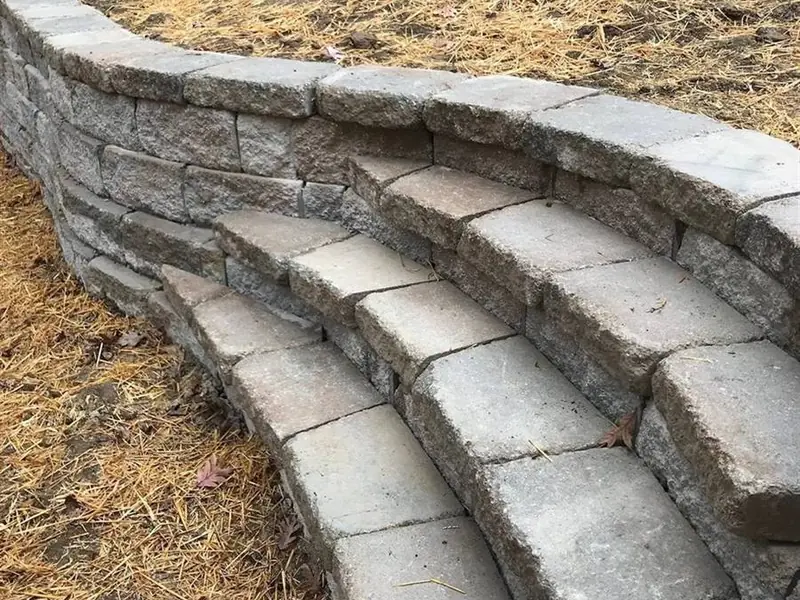
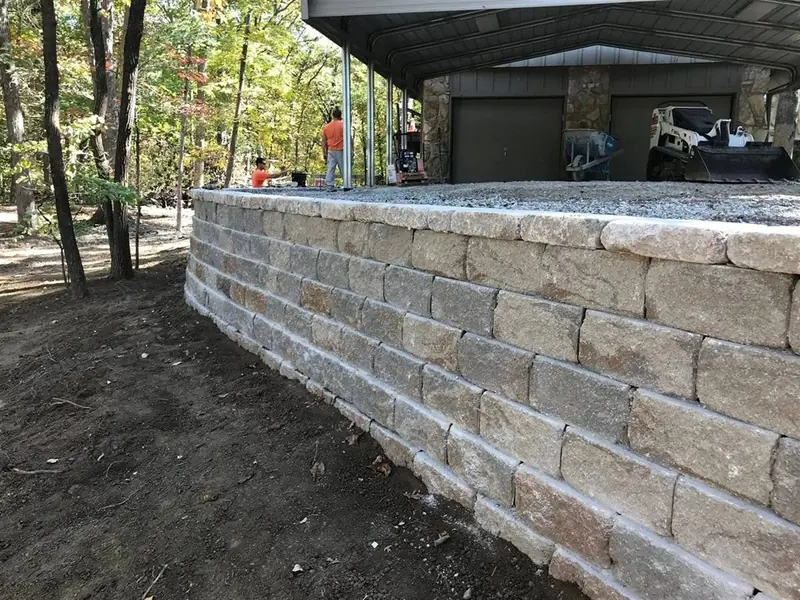
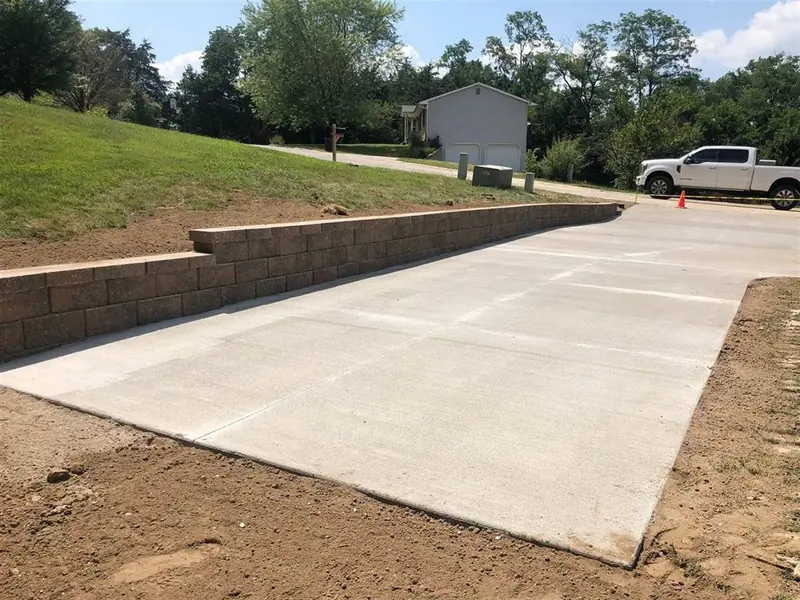
Free, in-person estimates on block and boulder retaining walls across St. James, Rolla & Phelps County.